Collecting a name and email address isn't the conversion goal. It's only the first handoff. A consulting firm also needs to capture enough context to decide what happens next, such as the prospect's service interest, urgency, role, company, source, or level of engagement.
That distinction changes how you evaluate lead capture examples. A short form may create more submissions but leave consultants guessing. A detailed form may qualify better but discourage serious prospects. A webinar registration creates a different signal from a referral introduction, and a LinkedIn reply needs a different response from a proposal request.
The most useful framework is practical: assess capture friction, qualification value, follow-up speed, and how reliably each source enters the central system. The eight examples below map each mechanism to the moment of intent it creates, the signal it collects, and the Starward Navigators workflow that should act on it. Starward Navigators can centralize website, LinkedIn, email, event, and referral inputs into acquisition pipelines, so a small team doesn't have to manage disconnected records.
Table of Contents
- 1. Website Embedded Forms and Pop-ups
- 2. LinkedIn Lead Generation and Outreach
- 3. Email List Building and Newsletter Signup
- 4. Event and Webinar Lead Capture
- 5. Content Marketing and SEO Landing Pages
- 6. Referral and Partnership Lead Exchange
- 7. Direct Outreach and Cold Email Campaigns
- 8. Assessment Tools and Interactive Lead Magnets
- 8 Lead Capture Methods Compared
- Turn Eight Capture Points Into One Operating System
1. Website Embedded Forms and Pop-ups
A website form works best when it appears at the point where a visitor has already shown a relevant intent. A service page visitor is telling you more than a homepage visitor. Someone reading a case study or reviewing a proposal-related page has supplied useful context before submitting anything.
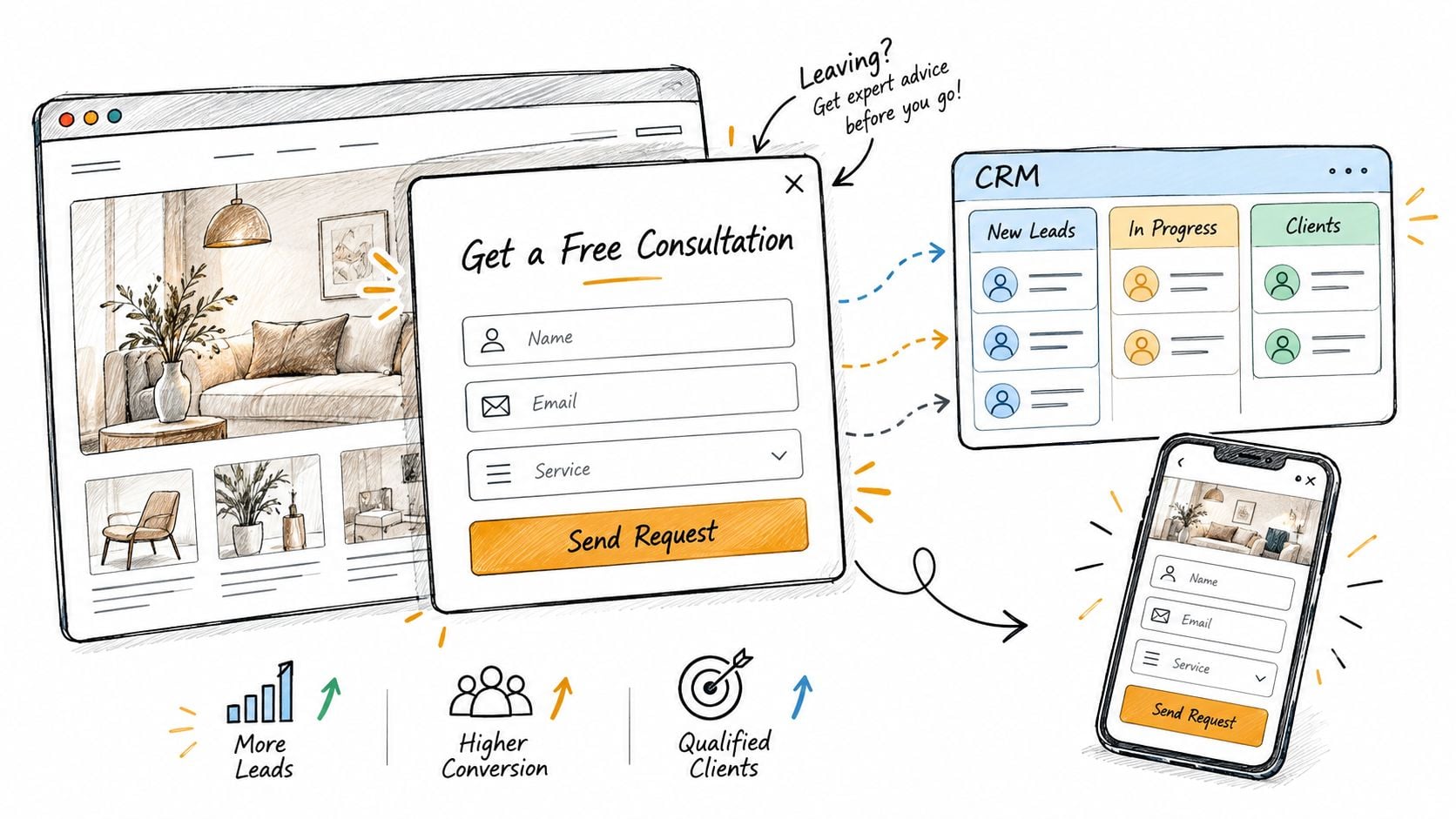
Use embedded forms on service pages, contact pages, assessment pages, and high-value content. A slide-in or exit-intent prompt can help recover visitors who are leaving, but it shouldn't interrupt every engaged visitor. The form should ask for the information needed to assign and respond, such as name, work email, firm, service need, and one meaningful qualification question.
The trade-off is simple. More fields can improve routing, but they also increase the effort required before trust has been established. One B2B experiment reduced an 11-field form to four fields and saw its landing-page conversion rate rise from 3.8% to 7.6%, while the sales-qualified-lead rate declined by only 6% across 5,400 visitors over two weeks, as documented in this B2B form conversion experiment. The lesson isn't to remove every qualification field. It's to delay questions that consultants can answer during scheduling or discovery.
Route the submission immediately
Starward Navigators' form tools can connect to an existing website or use its Sites tools. Configure routing by service line, geography, or owner. The submission should create or update the contact, assign responsibility, send an acknowledgment, offer an appointment link, and create a follow-up task.
Strategic rule: A website form isn't complete until the right person owns the record and the prospect knows what happens next.
2. LinkedIn Lead Generation and Outreach
LinkedIn creates intent through interaction rather than a single conversion event. A prospect may engage with a post, accept a connection request, submit a LinkedIn lead form, reply to a message, or visit a consultant's profile after reading an insight. Each action carries a different qualification signal.
For a boutique advisory firm, the strongest approach combines research with useful communication. Identify relevant roles and accounts, review company developments, and write a message that reflects a plausible operating problem. A connection request that immediately pitches a service usually creates resistance. A message that shares a relevant observation or asks a focused diagnostic question gives the prospect a reason to continue.
LinkedIn lead forms can collect structured information, while direct conversations collect richer but less standardized context. Keep both paths connected. A lead form submission should enter the pipeline with its campaign and company details. A reply should be attached to the contact record, with the conversation summarized so another team member can understand the situation without searching through personal inboxes.
Build a visible response path
Starward Navigators can route LinkedIn-sourced records into a unified pipeline and trigger follow-up based on the source, company, industry, or service interest. Use an opportunity-source field consistently. Without that field, a firm may know that LinkedIn produces activity but not whether it produces discovery calls, proposals, or revenue.
A short sequence can move from connection, to a relevant message, to a useful resource. Stop when the prospect declines or shows no interest. Automation should support judgment, not turn personal outreach into repetitive broadcasting.
LinkedIn should create a reason for a conversation, not force a conversation before the buyer has supplied enough context.
A practical scenario is a fractional executive who notices that a newly promoted operations leader is publishing about scaling problems. The capture signal isn't just the contact record. It includes role change, stated challenge, company context, and the content that prompted the reply. That information should shape the next message and the eventual discovery agenda.
3. Email List Building and Newsletter Signup
An email signup captures ongoing interest, not necessarily immediate buying intent. That distinction matters for consulting firms because a subscriber may be researching a problem long before they're ready to hire an advisor. Treating every subscriber as a sales opportunity creates noisy pipelines and unwanted follow-up.
A useful newsletter or lead magnet should connect directly to the firm's expertise. A sales advisory firm might offer a diagnostic guide for sales process problems. A fractional CFO firm might offer an assessment framework for financial visibility. An operations consultant might publish a practical planning template. The asset should help the right buyer recognize a problem the firm can solve.
Ask for the minimum information needed to deliver the resource and segment the relationship. Role, firm, service interest, and source are often more valuable than a long questionnaire. Follow-up can collect additional context when the subscriber downloads another asset, clicks a relevant message, registers for an event, or requests a conversation.
The qualification trade-off is visible in benchmark reporting. One dataset found that only 66% of people who start a form complete it, while another reported a 4.02% average landing-page conversion rate and a 13% average for LinkedIn Lead Gen Forms. Those figures come from different contexts and aren't directly comparable, as explained in this lead generation benchmark overview. They do show why a firm should define the conversion event before judging a form.
Use Starward Navigators to record the asset, source, role, and engagement activity. A highly engaged subscriber can move into a sales stage, while a new subscriber can remain in nurture.
For practical guidance on building an acquisition-focused email channel, see generating leads for email marketing.
A newsletter signup should start a relevant relationship, not trigger an immediate sales pitch.
4. Event and Webinar Lead Capture
An event registration captures declared interest in a topic. Attendance adds another signal. Questions, poll responses, direct conversations, and requests for follow-up add more context still. The mistake is storing all of these people as one undifferentiated event list.
Keep registration friction low enough that the right audience can join. Collect contact details, firm information, and the topic or service area that matters. Use reminders to support attendance, then separate people who attended from those who registered but didn't participate. The follow-up should reflect that difference.
A webinar about operational planning may produce three distinct groups. One person registers to research the topic. Another attends and asks a detailed question. A third requests a conversation after the session. Each record should carry a different next action, not the same generic replay email.
Starward Navigators can assign the event as an opportunity source, move attendees into an appropriate warm-lead stage, and send a same-day follow-up with the replay or next step. The workflow should also create a task for high-intent interactions, such as a direct question about scope, timing, or implementation.
Treat events as conversations
A conference contact often includes details that a form cannot collect, including the problem discussed, the current approach, and the reason the person is exploring alternatives. Record those notes while the conversation is fresh. A badge scan without context is only a contact export.
The broader follow-up process matters because client acquisition and delivery eventually meet. Firms that want the handoff to remain visible can connect event opportunities to what client onboarding involves and define the transition before the event begins.
The event is not the capture point. The capture point is the record containing the topic, the conversation, the owner, and the next action.
5. Content Marketing and SEO Landing Pages
Content captures intent when a prospect searches for a problem and finds a useful answer. That makes organic content especially valuable for consulting firms. A visitor searching for “sales process consulting for SaaS” has supplied more context than someone who arrives through a broad brand query.
Build content around the questions clients ask before they contact an advisor. A pillar guide can explain a complex problem, while supporting articles address specific symptoms, decisions, and implementation concerns. Case studies, assessments, and proposal-request pages can provide stronger conversion points after the reader has received useful information.
Don't gate every asset. Ungated educational content can build search visibility and trust. Gate a premium assessment, template, or detailed guide when the exchange gives the visitor a clear benefit. Place the call to action after the content has established relevance. A form at the beginning of an article often asks for commitment before the reader understands why the resource is worth receiving.
Connect content to commercial intent
Track the page, topic, conversion type, and source in Starward Navigators. A content download can trigger a welcome message, followed by nurture related to the subject. A consultation request from a service page should receive a faster, more direct workflow. Those are different signals and shouldn't enter the same sequence.
For example, a sales consulting firm might publish an ungated article about pipeline discipline, then offer a gated diagnostic worksheet. The first interaction shows research intent. The worksheet completion shows willingness to evaluate the problem. The workflow should preserve both pieces of context for the eventual discovery call.

Let the content answer enough of the question to earn trust, then make the next useful step easy to take.
A strong content pipeline measures more than downloads. Review qualified-lead rate, meetings, proposals, decisions, and revenue by topic. A popular article that produces no commercially relevant conversations may need a different call to action or a sharper audience definition.
6. Referral and Partnership Lead Exchange
Referrals capture trust that another person has already built. A partner, former client, accountant, attorney, executive coach, or complementary advisor can introduce a prospect with context and credibility that a cold form cannot provide.
The mechanism works only when the referral relationship is managed deliberately. Define the type of client that fits, the problems the firm handles, how introductions should be made, and what the referring partner can expect after the introduction. If the process lives only in personal memory, follow-up becomes inconsistent as delivery work gets busy.
A practical scenario is a fractional CFO firm that works with accounting practices. The accountant identifies a client who needs deeper financial planning, makes an introduction, and expects the consulting firm to respond promptly without creating confusion about ownership. The record should include the referring partner, introduction date, service need, responsible consultant, and next action.
Starward Navigators provides a Relationships and Referrals pipeline for tracking partner engagement, referred opportunities, nurture, and thank-you workflows. When an opportunity progresses, the firm can record the outcome and give the partner appropriate feedback. The system should support the relationship whether or not the first referral closes.
Protect the relationship after the introduction
Don't send a generic campaign to a referred prospect. Acknowledge the introduction, reference the context provided, and make scheduling straightforward. Keep the referring partner informed within appropriate privacy boundaries. If the opportunity isn't ready, place it into a defined nurture path rather than letting it disappear.
For a more detailed operating approach, use this guide to track referrals.
A referral program isn't a source list. It's a managed relationship with clear ownership before, during, and after each introduction.
7. Direct Outreach and Cold Email Campaigns
Cold outreach captures intent by creating a relevant reason for a prospect to respond. It doesn't start with a form submission, so the consultant must do more of the qualification work before the first message. That makes research quality more important than message volume.
Build account criteria around the clients the firm can serve well. Review the company, role, recent developments, and likely operating pressure. A message to a newly funded company should differ from a message to an established business replacing a sales leader. The first email can ask a diagnostic question or share a focused observation instead of immediately requesting a meeting.
The most common failure is a generic pitch sent to a broad list. It produces weak replies, poor learning, and a pipeline full of contacts with no useful context. Another failure is treating silence as a reason to continue indefinitely. A short, respectful sequence with a different angle in each message is easier to manage and easier for the recipient to understand.
Preserve the research
Starward Navigators can capture replies, assign them to the appropriate owner, and record cold outreach as the opportunity source. Add a brief research note to the record before the message is sent. That note should explain why the account was selected and what problem the message addresses.
A reply such as “send me more information” isn't automatically a qualified opportunity. The next step should identify the relevant issue, urgency, current approach, and appropriate stakeholder. The system can automate reminders, but a consultant still needs to interpret the response.
An effective workflow might move from research, to initial email, to a follow-up with a different insight, to a final close-the-loop message. When a prospect replies, the sequence should stop and create a human task.
Automate the reminders and recordkeeping. Keep the diagnosis and judgment with the consultant.
Measure this source through conversations, qualified opportunities, proposals, and revenue, not just sends or replies. Cold outreach can look busy while producing little commercial value if the targeting and offer aren't precise.
8. Assessment Tools and Interactive Lead Magnets
An assessment captures more than contact information because the prospect answers questions about their current situation. A scorecard, diagnostic quiz, maturity assessment, or calculator can create a useful exchange: the prospect receives an initial interpretation, and the consulting firm receives structured qualification data.
The tool should reflect the firm's actual engagement scope. A sales process assessment might ask about pipeline visibility, qualification discipline, forecasting, and handoffs. A financial health assessment might explore reporting reliability, planning processes, and management visibility. Questions that have no connection to the firm's work create curiosity without creating a useful sales conversation.
Keep the experience focused. Ask only what's needed to produce a credible result and a relevant next step. The results page should explain what the score means in practical language, identify a likely gap, and offer a choice such as reviewing the findings with a consultant. Avoid presenting a simplistic score as a definitive business diagnosis.
Starward Navigators can segment assessment leads by result and trigger different follow-up paths. A prospect with a clear urgent gap may receive an appointment invitation. Someone with a moderate result may enter an educational sequence. A low-fit submission can be routed away from senior consultant capacity while still receiving an appropriate response.
Make the result useful without overselling
The best interactive lead magnets give enough value before the sales conversation to establish credibility. They also make the qualification signal visible to the consultant. Record the assessment type, completion status, result category, service interest, and requested next step.
A diagnostic call should begin with the prospect's stated answers, not a request to repeat the entire form. That makes the interaction feel continuous and gives the consultant a stronger starting point.
An assessment earns its place when the result improves the prospect's decision and the consultant's first conversation.
For firms considering a short interactive experience, the implementation path is straightforward: define the engagement problem, write the scoring logic, create the result explanation, connect completion to the pipeline, and test whether results lead to qualified conversations.
8 Lead Capture Methods Compared
| Tactic | Implementation Complexity 🔄 | Resources & Speed ⚡ | Expected Outcomes ⭐ | Ideal Use Cases 💡 | Key Advantages 📊 |
|---|---|---|---|---|---|
| Website Embedded Forms & Pop-ups | Low–Medium, simple setup, ongoing CRO 🔄 | Low cost, quick to deploy; requires testing ⚡ | Medium–High, high conversion on intent pages ⭐⭐⭐⭐ | High-traffic service pages, booking demos | 24/7 capture, instant CRM routing, segmented leads |
| LinkedIn Lead Generation & Outreach | Medium–High, tooling + personalized outreach 🔄 | Moderate subscription cost; steady human effort; medium speed ⚡ | High-quality B2B leads, strong fit potential ⭐⭐⭐⭐ | Targeted account-based B2B outreach, thought leadership | Direct access to decision-makers, precise targeting |
| Email List Building & Newsletter Signup | Medium, content strategy and list hygiene 🔄 | Low cost but slow build; ongoing content required ⚡ | High lifetime value; good for long nurtures ⭐⭐⭐⭐ | Nurture programs, long sales cycles, educational content | Scalable qualified audience, measurable engagement metrics |
| Event & Webinar Lead Capture | Medium–High, logistics + promotion required 🔄 | Moderate–High resources; events produce fast lead spikes ⚡ | Warm, high-intent leads from attendees ⭐⭐⭐⭐ | Product demos, authority-building webinars, industry topics | Strong engagement, direct follow-up angles, replay reuse |
| Content Marketing & SEO Landing Pages | Medium–High, strategy, writing, and SEO work 🔄 | Moderate resources; slow to rank but compounding ROI ⚡ | Very high-quality, intent-driven leads over time ⭐⭐⭐⭐ | Long-term inbound, authority building, evergreen offers | Low CPL long-term, sustained organic traffic, trust building |
| Referral & Partnership Lead Exchange | High, relationship building and process setup 🔄 | Low monetary cost but slow to establish (months) ⚡ | Very high conversion; warm pre-qualified leads ⭐⭐⭐⭐⭐ | Complementary services, past-client networks, trusted introductions | Lowest CPL, high close rates, repeatable when nurtured |
| Direct Outreach & Cold Email Campaigns | Medium–High, research + personalization needed 🔄 | Moderate resources; quick feedback loop, scalable ⚡ | Moderate effectiveness; low response rates but targeted ⭐⭐⭐ | Target accounts, fast pipeline fill, complement inbound | Controllable targeting and timing, rapid message testing |
| Assessment Tools & Interactive Lead Magnets | High, development, design, and testing required 🔄 | Higher upfront cost; medium speed post-launch ⚡ | High engagement and built-in qualification ⭐⭐⭐⭐ | Diagnosing fit, educational gating, ROI calculators | Rich qualification data, higher completion/share rates |
Turn Eight Capture Points Into One Operating System
These eight mechanisms fall into three practical priorities.
The first is reducing friction on high-intent inbound pages. Website forms, service-page requests, proposal inquiries, and appointment forms should make the next step obvious. Collect the context needed for routing, not every question a consultant might eventually ask. A form that creates a record instantly is more useful than a detailed form that nobody completes.
The second is creating context-rich capture. LinkedIn, content, events, webinars, and assessments reveal why the prospect is paying attention. Preserve the post, message, topic, question, assessment result, or page that prompted the interaction. That context helps the owner write a relevant response and prevents every new lead from entering the same generic sequence.
The third is building relationship channels that compound. Email subscribers and referral partners may not create immediate opportunities, but they can become valuable over time when the firm sends relevant insight, follows up on engagement, and maintains trust. These channels need clear ownership too. A referral partner should have a relationship stage, and a subscriber should have a defined path from education to conversation.
A practical implementation sequence is:
- Choose one immediate-intent source: Start with the form, inbox, event, or referral channel most likely to produce a relevant conversation.
- Define minimum qualifying fields: Capture contact details, service need, source, owner, and one question that improves routing.
- Assign an opportunity source: Use consistent values for website, LinkedIn, email, event, assessment, outreach, and referral.
- Create the first follow-up trigger: Send an acknowledgment, create an owner task, provide a scheduling link, or start the appropriate nurture sequence.
- Review conversion by source: Compare captured leads with qualified conversations, opportunities, proposals, decisions, and revenue.
The timing of the first response deserves special attention. The 2007 Lead Response Management Study analyzed more than 15,000 leads across six companies and found that contacting a lead within 5 minutes, rather than waiting 30 minutes, made successful contact about 100 times more likely and qualification about 21 times more likely, as summarized in this lead response benchmark analysis. Those are relative odds from a specific study, not a guaranteed result for every consulting market. They still provide a useful operating principle: capture, routing, acknowledgment, and first follow-up belong in one workflow.
Before launch, verify that every capture point records the contact, company, service interest, source, owner, submission timestamp, response deadline, next action, and stage. Confirm that forms create or update records, replies stop automated sequences, appointments trigger reminders, event attendance changes follow-up, proposals create tasks, and referrals remain connected to the partner relationship.
Starward Navigators is relevant when a small consulting or advisory firm needs website forms, inboxes, LinkedIn activity, events, appointments, proposals, handoffs, and referral relationships connected to one operating process. Its prebuilt pipelines and workflows are designed to connect acquisition activity with the follow-up and delivery steps that come after capture.
Starward Navigators provides connected forms, acquisition pipelines, automated follow-up, appointment reminders, proposal tracking, client handoffs, and referral workflows for small consulting and advisory firms. Visit Starward Navigators to connect your lead capture examples to a practical operating system.